
Market Insight · Digital Infrastructure
Why Mexico’s Data Center Boom Is the Next Big Driver for Industrial Real Estate
The Mexico data center boom has more than doubled national capacity in two years — and every megawatt built pulls a supply chain of industrial tenants with it. Here’s why the boom is reshaping demand for industrial real estate in Querétaro, Monterrey, and the Bajío.
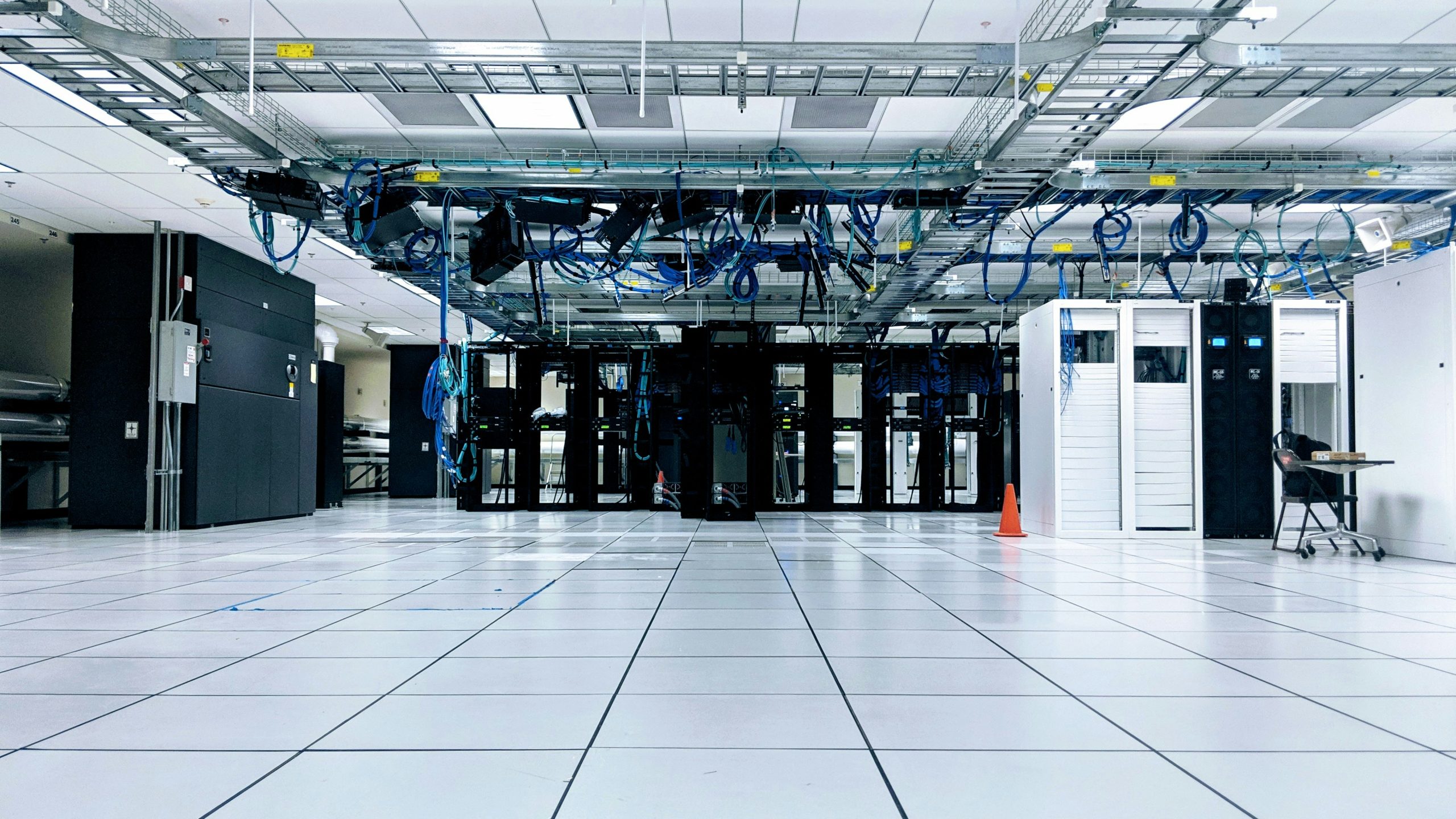
Data centers anchor a supplier ecosystem that leases industrial space long after construction ends. Photo: Taylor Vick / Unsplash.
The Data Center Boom Reaches Mexico’s Industrial Corridors
Mexico’s data center market has moved from a niche play to one of the fastest-growing segments of industrial real estate. National operational capacity reached 279MW in April 2026, up from 235MW in 2025 and just 115MW in 2024 — with another 205MW under construction and more than 1,700MW announced for the coming years, according to the Mexican Association of Data Centers (MEXDC). Operators including Equinix, KIO Networks, ODATA, CloudHQ, and Ascenty are building hyperscale-ready capacity across three core hubs: Querétaro, Monterrey, and Mexico City.
The pipeline behind that growth is significant: an estimated $82.5 billion in construction and equipment investment is expected between 2026 and 2031, generating roughly 98,000 direct and indirect construction jobs and 35,000 more tied to ongoing operations. Querétaro already concentrates the largest share of the country’s installed capacity and has become the anchor of Mexico’s digital infrastructure buildout.
The hyperscalers are writing checks to match. AWS launched its México Central region in early 2025 with a committed investment of over $5 billion across 15 years. Microsoft announced $1.3 billion in cloud and AI infrastructure over three years, alongside digital skills programs. Google Cloud operates its Querétaro region — its third in Latin America — offering low latency, local data residency, and cloud and AI services to enterprise and public-sector clients.
The Supply Chain Behind Every Data Center
A data center is never just a building. Before it opens its doors, it pulls in an entire supply chain of industrial tenants: manufacturers of electrical switchgear and transformers, precision cooling providers, fiber and connectivity companies, and prefabrication contractors that assemble structural and mechanical components off-site. Once the facility is operational, that ecosystem stays — servers, cooling equipment, and power systems run on continuous replacement and upgrade cycles, which keeps these suppliers leasing warehouse and light-manufacturing space long after construction wraps.
This is where the story becomes an industrial real estate story, not just a technology one. In the United States, the data center supplier ecosystem already represents a fast-growing share of new industrial leasing activity. The same dynamic is now taking shape in Mexico: as campuses multiply across Querétaro, Monterrey, and the Bajío, the electrical, cooling, and component manufacturers that serve them are evaluating Mexican industrial parks as a regional base — an entirely new tenant category on top of the automotive, electronics, and logistics demand that nearshoring already generates.
Data Centers: The Hidden Engine Behind Nearshoring
Nearshoring is usually told as a manufacturing story — new plants, new jobs, new highways to the border. But modern plants aren’t just assembly lines anymore; they’re hyperconnected operations that depend on nearby data infrastructure to function.
For a plant in Monterrey to coordinate production data with an office in Texas or California in real time, that round trip has to be nearly instantaneous. If the data travels to a server in Virginia or Europe and back, an automated production line can stall. Data centers located in hubs like Querétaro, Mexico City, and Monterrey let that processing happen at the network’s edge, keeping latency imperceptible. There is also a data sovereignty angle: certified local facilities help global manufacturers meet increasingly strict data protection requirements while keeping intellectual property under enterprise-grade redundancy.
Not every facility qualifies as “nearshoring-ready,” though. The sites that do share four traits: carrier-neutral, high-speed connectivity with multiple fiber providers; international certifications such as Uptime Institute Tier III/IV, ISO 27001, and PCI-DSS; energy scalability, including redundant power contracts and efficient cooling; and extreme physical security. Facilities and industrial parks that check these boxes are the ones nearshoring tenants compete for.
Land Is Becoming a Strategic Asset, Not Just Square Footage
Nowhere is the shift clearer than in Querétaro, which concentrates roughly four out of every five megawatts of data center capacity in Mexico. Industrial land in submarkets like El Marqués and Colón is no longer marketed as generic industrial land — it is increasingly sold or leased based on whether it has guaranteed electrical capacity attached to it. That single variable has become a bigger driver of land value than location, size, or highway access. Industrial vacancy in Querétaro sits near 6%, among the tightest in the country, even as inventory keeps expanding.
That scarcity is creating direct competition between two very different tenants: automotive and traditional manufacturing on one side, and data center developers on the other. Both need the same large, power-ready parcels in the same handful of corridors — and electricity demand tied to data centers alone is projected to grow several-fold by 2030, intensifying the competition well before the decade is out.
Monterrey tells a similar story from a different angle: the metro led the country in new industrial supply in late 2025, adding more than 535,000 square meters (5.7 million square feet) of space, at the same time that hyperscale projects broke ground and power constraints were already being reported as a limiting factor. Across the broader Bajío, net industrial absorption reached roughly 722,000 square meters (7.7 million square feet) in 2024, up 51% year over year — this new category of demand is landing on top of a market that was already expanding fast.
Power Is the New Location Criteria
The single biggest constraint shaping where this demand lands is energy. Grid reserve margins in Mexico have fallen below the 6% regulatory minimum at points in recent years, and over 60% of the national transmission network runs near maximum capacity — with bottlenecks concentrated in exactly the corridors absorbing the most industrial demand: the Bajío, Nuevo León, and the northern border states.
As a result, developers increasingly evaluate energy before land: private substations, on-site generation, and hybrid storage are becoming standard requirements for large-format projects. CFE has announced a multibillion-dollar transmission expansion plan running through 2030, but in the meantime, power-ready sites command a real premium — and utility approval for new transformer capacity can take over a year, adding delivery risk to projects that depend on it.
Opportunities and Challenges for Industrial Real Estate
- Power availability: sites with confirmed grid capacity or feasible on-site generation are increasingly the deciding factor in lease and land decisions.
- New tenant categories: electrical equipment manufacturers, cooling suppliers, and prefabrication contractors are emerging as a distinct and growing category of industrial tenant.
- Land competition: in tight submarkets like Querétaro, data center developers and manufacturers are bidding for the same power-ready parcels.
- Regional competition: data center investment moves on 12–18 month cycles, and Mexico competes directly with markets like Colombia and Chile that have moved quickly on dedicated capacity.
- Permitting timelines: utility approvals for new transformer capacity can take close to 14 months, adding real delivery risk.
How SELECT Can Support Your Expansion
With deep roots in Mexico’s core industrial corridors — Monterrey, Saltillo, San Luis Potosí, Querétaro, and beyond — SELECT helps occupiers and developers navigate this shift: finding a warehouse for lease in Monterrey or an industrial building in San Luis Potosí with energy availability in mind, not just square footage; benchmarking lease terms across submarkets seeing data-center spillover demand; and providing tenant representation with direct relationships to the landlords and developers active in high-growth corridors. For the trade-policy side of the nearshoring equation, see our review of what the USMCA’s 2026 review means for industrial real estate.
FAQ
What is driving Mexico’s data center boom in 2026?
Which regions are seeing the most data center-related industrial demand?
Why is power availability more important than land right now?
Are data centers competing with manufacturers for industrial land?
What kind of industrial tenants does a data center bring with it?
Why does a factory need a data center nearby?
What are the main risks to Mexico’s data center opportunity?
- Mexican Association of Data Centers (MEXDC) capacity figures, via Mexico Business News, 2026.
- Bisnow, “Data Centers Are Becoming Industrial’s Growth Engine,” May 2026.
- Mexico Business News, “Powering the Manufacturing and Data Center Boom,” June 2026.
- El Financiero, “Datacenters, el nearshoring necesario,” July 2026.
- DataCenterDynamics, “El boom de data centers en Querétaro,” 2026.
- Solili, Reporte Industrial 4T 2025 · Inmobiliare · Centro Urbano, 2026.
Evaluating a site near Mexico’s data center corridors?
Tell us your size range, power needs, and timing — we’ll come back with current availability in Querétaro, Monterrey, the Bajío, and beyond.
WhatsApp us — fastest response